Showing posts with label 2a. Show all posts

Wednesday, April 29, 2009

Nordyke and The Nunchukas


I stated in my discussion of the 9th circuit's Nordyke ruling, the incorporation language held there may be extended to other states of the plaintiff files an appeal with the Supreme Court of the United States, and if the court decided to hear it, but it appears that we may not have to wait that long.

Somewhat surprisingly, the case now most likely to reach the Court first on that issue will not be about guns, but about “chuka sticks.”  Still, those are treated, at least by New York state, as a personal weapon, and the legislature there has banned even their possession in the home.  Formally named a “nunchaku,” a chuka is two pieces of rigid material joined by a thong or rope.  The legislature found they could be used to injure — or even kill — someone by striking them or choking them with one of the sticks while holding the other.  But martial artists also use them in training exercises.

A Port Washington, N.Y., lawyer, James M. Maloney, was arrested for having a chuka stick in his home nearly nine years ago. His case has become a significant test of whether he had a Second Amendment right to have that weapon for personal use. 

Maloney’s petition, his lawyer wrote, will argue “that the individual right conferred by the Second Amendment should be held incorporated against the states,” through the Fourteenth Amendment.  The Second Circuit, in a decision Jan. 28 (Circuit docket 07-581), dismissed Maloney’s challenge to the New York law.

That conclusion, however, conflicts directly with the Ninth Circuit Court’s decision last Monday in Nordyke, et al., v. King, et al. (Circuit docket 07-15763).   That is the sort of conflict that can lead the Supreme Court to step in to resolve the dispute. If the lawyers in the Nordyke case pursue an early appeal to the Court (a decision not yet made), both cases could be up for consideration together by the Justices.

[...]

The Maloney case on “chukas” — and perhaps the Nordyke case on guns, as well — could be ready for the Justices’ action early in the new Term starting in October.


This is particularily interesting, as not only did i bring up Nunchukas in my original discussion of Heller, but because i happen to know that in Arizona, which is in the 9th circuit, there is an outright ban on these particular weapons of ninja self defense. 

So, AZ, do we move now for the restoration of rights involved here, as the 9th circuits holding of incorporation in this district already primes the ground for the dismissal of that unjust law rooted in racist anti-turtle history, do we wait to see if a Nordyke appeal tosses out the incorporation talk or reinforces it,  or if the supreme court hears Maloney and makes it abundantly clear that not only do such radical awesome tiny pieces of wood connected with a little chain not only qualify as "arms" but that the second amendment is in fact held to be incorporated against the states and their status, in all cases, should be legal? 

What to do?

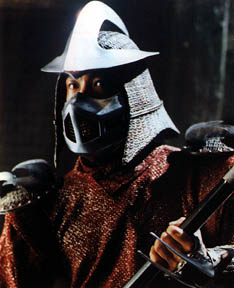
Untill y'all figure it out, ill be at the dojo, getting ready to take on the Foot Clan in the open again, its been rough having to hide my  quest all these years...


Wednesday, April 22, 2009

Rights-Shmights, and Unwarranted Fights

The Day After the Aniversary

It seems that over 200 years later, Poor General Gage has been vindicated by the 9th circuit court. It turns out that our "Fundamental Natural Rights" are, in fact, subject to the whims of ruling governments and their minions, and that, this whole event was just a simple misunderstanding.

It turns out, that when Colonists resisted the call to disperse and lay down their arms, at Concord and Lexington, as they felt they had a fair and natural right to self defense, and to in fact defend themselves, they were grossly mistaken.

No, not because they weren't allowed to assert that natural and god given right, but instead, because of where they tried to assert it.

You see, our poor misguided colonial heros, when confronted by a confiscatory and aggressive imperial army, assembled on the Town Green, a central square used by the community for events, gatherings, festivals, and faires... In fact, Public Government Property.

Uh oh. Well, now, we learn from the 9th circuit court of Appeals, thats a big no no.

The decision that was handed down of course, has little to do with the troubles with the redcoats, but does have a whole lot to do with natural rights, the abrogation of the rights by uppity "officials" in a position of power, and the nature of Public Government Property, and when it comes down to it, i'd say the parallels are noticable.

The case in question, is Nordyke v. King. On April 20, 2009 The Court of Appeals for the Ninth Circuit, in deciding that case, held that the Second Amendment was in fact incorporated.

The defendants in this case claimed that the Alemeda County's decision to ban firearms from county property (and therefor from the county fairgrounds, and therefor outlawing the county fairground's hosting of the local gunshow from which they obtain their lively-hood) was an abrogation of their rights as enumerated by the second amendment of the United States Constitution.

This is stupendously noteworthy, as, previous to last years Heller ruling, in the eyes of the court system, even exactly what right was protected by the second amendment, the right to keep and bear arms, was in question, and no court has ever held the second amendment to be incorporated, or binding to the laws of each state.

As strange as it may seem, the Bill of Rights, as the pinnacle of human rights protection and legal development and a beacon for freedom around the world, in fact, like most of the constitution, was never intended for limiting anything other than Federal Powers, and until the introduction of the 14th amendment, none of these rights were protected from usurpation by State Powers (an equally insidious bunch at times.) After the adoption of the 14th Amendment, that, however, fundimentally changed, but of course, it would take a long time to sort out exactly how it had changed. The Supreme Court, instead of just applying the Bill of Rights en mass, decided to incorporate them on a case by case, right by right basis. It was decided the federal courts should only apply those sections of the Bill of Rights to the states whose abridgment or abrogation would "shock the conscience," This was a slow process, but eventually, every right in the Bill of Rights was in fact incorporated, with five exceptions that remain unincorporated by the Supreme Court as it interprets the 14th amendment.
Amendment II
Right to keep and bear arms

Amendment
III
Freedom from quartering of soldiers

Amendment V
Right to
indictment by a grand jury

Amendment VII's
Right to jury trial
in civil cases

Amendment VIII
Protections against "excessive"
bail and "excessive" fines
(in a very complicated way, as this is still
protected in all 50 state constitutions)

As i wrote in my initial sumary of the Heller ruling, last year:

As D.C. is a federal district, nothing in this case specifically applies to state laws, like Illinois which may forbid or control the ability to bear arms. Luckily more than a dozen states (Mine included) specifically, and clearly affirm a right for the individual to bear arms in defense of self or state. Does yours? The Court did not explicitly incorporate the Second Amendment against the states, but it did cite several state cases in its decision supporting the idea that the second amendment protects an individual right, as well as stating, as i mentioned above, that the right does not originate in the second amendment. This leads many to speculate that the Court would be open to incorporation in a future case where a state law is challenged.

Well, this is that law, and this is that case, and the Ninth Circut Court of Appeals has in fact held that the second amendment is incorporated to the states, as a binding ruling. This of course, not being SCOTUS, is only binding to courts and states in the 9th Circuit, which includes, Montana, Idaho, Washington, Oregon, California, Nevada, and Arizona.

In the courts ruling, which you can read here, if you want, it very clearly states that the Second Amendment is incorporated, and that its protections are extended to the citizens of the seperate states. This ruling was made in direct influence of the Heller ruling, even overruling its own pre-heller ruling in Hickman, which was a case it heard on California's discriminatory and often abused "may-issue" concealed carry laws (As I predicted; opening the path for appeal in those cases.)

So, victory! One more section of the bill of rights, and its legal defense of Natural Fundimental Rights, now applies to people who live in at least some of the western states, right?

Well, not exactly, as thats not where the ruling ended.

The court says that since Heller realy didnt provide an acid test for what qualifies as infringement of the second amendment, they sorta just had to feel it out. The way they see it, the infringement in Heller, which was D.C.'s outright gun ban, would not have withstood any level of scrutiny, as it was an out and out ban on a fundimental natural right, and really, no one can get behind that. (Brady Bunchers and other American'ts Need Not Apply) But then, it distinguished the infringement here from the one in Heller. The ordinance here, it says, "does not directly impede the efficacy of self-defense or limit self defense in the home. Rather, it regulates gun possession in public places that are County property."


Because the infringement is less, the standard of review might not be a stringent. "not every law which makes a right more difficult to exercise is, ipso facto, an infringement of that right."

"If we apply these principles here, we conclude that although the Second Amendment, applied through the Due Process Clause, protects a right to keep and bear arms for individual self-defense, it does not contain an entitlement to bring guns onto government property."

So the court finds, although yes, The Second Amendment can be incorporated against the state and protect your right to have guns in your home for self-defense, that doesn't mean you also have the right to take a gun to a county-owned fairground.

"the Ordinance does not meaningfully impede the ability of individuals to defend themselves in their homes with usable firearms, the core of the right as Heller analyzed it. The Ordinance falls on the lawful side of the division, familiar from other areas of substantive due process doctrine, between unconstitutional interference with individual rights and permissible government nonfacilitation of their exercise."

The fairground, you see, is, fundamentally, a central square used by the community for events, gatherings, festivals, and faires. Public Government Property (sound familiar?) And according to the esteemed opinion of the 9th Circuit Court, that is an area where Fundamental Natural Rights are not necessary, and do not deserve either respect, or protection under the law.

Alot of people are citing the Incorporation language in this ruling as a victory for the realization of full civil rights for gun owners, but in the end, the fact is, the defendants lost their appeal, and are still denied both their Second Amendment Right, (now, only in certain officially defined areas, and in certain "reasonable" ways) and their lively-hood.

If you would like to know more about the 14th Amendment, and Incorporation of the Bill of rights, this very thorough article may be of use to you. http://federalistblog.us/mt/articles/14th_dummy_guide.htm

I expect, if this case does proceed to the Supreme Court, (the defendants can appeal further) and that court finds the same way, that the official apology to the late General Gage, and the eventual reconciliation of the colonies to its rightful ruling crown, will be forthcoming, and as swiftly as possible. This terrible misunderstanding about us measly Americans having Natural Unalienable rights has caused so much difficulty and division over these many years, but i am confident the wounds can be healed, now that we know the truth, and I give my thanks to the 9th for being so kind as to have cleared it up.

As Commenter Bodicea at Arms and the Law made the point, in a more thorough illustration than i think i could muster, laws passed under the guise of "reasonable regulation" that is here used to justify the denial of a basic right, is nothing more than the ghost of a soon to be dead right. His comment, from this page, was as follows:

In every case, whatever gun restriction is being challenged will be upheld as "reasonable."

Soon enough there will be no lawful (that is "reasonably restricted") way to have a gun unless you inherit it from someone who bought it before 1968. That's assuming you can even get a personal-firearms-possession-license-- the license fee will be 10% of your Form 1040 Line 38 Adjusted Gross Income, and your license may be refused or revoked anytime without notice on the "reasonable" whim of any sheriff, police chief, or deputy State attorney. You'll have to store your gun at all times, other than your reasonably-allowed (single) annual trip to the (only) State-licensed shooting range, disassembled in a government approved floor safe (which you must remove if you ever sell or vacate your home), subject to warrantless surprise inspections four times yearly (inspection fee $350 per inspection). Also you will have to pay a $200 fee to re-register each gun annually (with confiscation and possible prosecution for unlicensed possession the punishment for late renewal).

Your credit card, supermarket affinity card, and bank records will be provided to the Brady Campaign and if you ever purchase beer, liquor, cigarettes, red meat, Kraft cheese, or Hostess Twinkies (or attend a boxing match) the Brady bunch will report you to the State Attorney's office which will revoke your personal firearms possession license, then immediately indict you for unlawful possession.

Reasonable restrictions on ammunition will limit you to buying or reloading one box of 50 or fewer cartridges in any 13-month period. Of course you'll have to order cartridges or components 3 months in advance since both bullets and cases must be individually engraved with your Social Security Number plus a unique serial number and the propellant must contain 1% taggants marked with your personal firearms possession license number. Anyway, you won't need much ammo because you will be reasonably restricted to firing it at the state's (only) licensed shooting range, where range staff must count and log by serial number all of the ammo in your bag on the way in, and again on the way out, so the State has a reasonable record of which cartridges you fired lawfully.

During warrantless surprise inspections of your licensed gun safe you will have to produce all unfired cartridges which State records indicate you ought to possess. If any are missing you will be presumed (rebuttably, of course) to have fired them unlawfully. You will be tried on one count for each missing component (case, bullet, propellant charge, primer) of a cartridge, for each day it was missing (that is, since it was last logged by personnel at the (only) State-licensed shooting range, unless you confess to unlawfully firing it or leaving it where a child could take it on a specific date prior to the date the inspectors discovered you could not produce it) but the maximum penalty for each count will be just 360 days, so you will not be entitled to a jury trial-- none of the "missing ammo" charges against you will be "felonies," even though the penalty upon conviction on all counts will be decades in prison.

There is no end to the parade of "reasonable" restrictions antigun fanatics will dream up and write into law. As soon as an appeals court lets any restriction pass as "reasonable" the underlying Constitutional right has been thrown down the cloaca maxima.


If none of this seems terribly important to you, I would venture that you are probably not a gun owner, and while a certain level of disinterest is understandable, I, of course, think that all Civil Rights, the Natural Fundamental sort especially, are equally as important, and should be evenly applied, protected and honoured, for all people, everywhere. PERIOD. If you will humor me, imagine that the right that is being regulated to increasing nonexistence is something like Free Speach, or the Right to Assemble, or to practice the religion of your choosing, and you might begin to see why i find this all very troubling.

After all, it was the doctrine of "permissible government nonfacilitation of the exercise of a right." which led us to these:


Havent seen one? Look for them, they are often behind chain link fences.

I think they have one at your local county fairgrounds...

Thursday, June 26, 2008

SCOTUS hands down Heller

Today the supreme court handed down a landmark judgment in the DC v. Heller case, the first case heard by the court on the the Second Amendment, the right to bear arms, since a 1939 case was argued by only the prosecution, and the first comprehensive look at the meaning of the Second Amendment to the Constitution of the United States since it was ratified 217 years ago.

Heller is a security guard and special federal police officer living in DC who applied for, and was denied the license to have a handgun in his home. He then sued on the basis that he says that the second amendment guarantees his right to own an operational firearm, something the Federal District denied him. The judgement that came today, came as no suprise to most who had followed the case, and in fact the majority (by 2 to 1) of Americans asked to consider the same question.

In short: The Right to own, keep and bear arms is an individual right, protected by the second amendment.

Period.

“Nowhere else in the Constitution does a ‘right’ attributed to ‘the people’ refer to anything other than an individual right.” pg 6

This is the point in the opinion where a good number of freedom loving Americans set off fireworks and shouted Victory, and in fact this is a victory, as a opinionated and influential group of American'ts has long been trying to convince Rational America that the second amendment only applies to the militia, which, by some magical oversight of hierarchy and structure is considered to be the National Guard. There has been bickering and oppinion on both sides of the issue for years, as new gun control laws were debated, but never before have we heard a court state what the actual law is.

But I dont think that is where the story ends, as it is hardly all that the justices stated in the 157 page opinion, which, if you like, you can read here. It would not be an understatement to say that this is the most important and groundbreaking ruling of this courts session, and perhaps of the last two generations.

If the Supreme Court’s historic ruling on gun rights brings about, as the dissenters said, “a dramatic upheaval in the law,” it would be no suprise to many, and, in fact, Justice Scalia’s opinion for the Court conceded that the ruling in District of Columbia v. Heller was only a first step, saying: “Since this case represents this Court’s first in-depth examination of the Second Amendment, one should not expect it to clarify the entire field.” This more than a valid disclaimer, as not only does it not clarify the whole field, it in fact greatly ignores a number of questions surrounding the full extent of protection offered by the second amendment, not to mention the matter of the court's jurisdiction, but what it does do, in its tightly tailored and narrow opinion, is leave a good number of doors wide open for any number of later suits.

In short, my understanding of a quick reading of the opinion states that the supreme law of the land concerning the right to bear arms is an individual right, not dependent upon membership in an organized militia. The right exists for otherwise lawful purposes, specifically noting that self defense is one of the bases for the right. The Court also recognized that the right is a pre-existing right, as well, not one granted by the constitution. (this might be important on a state level)

"As we said in United States v. Cruikshank, 92 U. S. 542, 553 (1876), “[t]his is not a right granted by the Constitution. Neither is it in any manner dependent upon that instrument for its existence. The Second amendment declares that it shall not be infringed" pg 38.

The court did also find, however, that restrictions of the Right to Bear Arms are permissible. specificly refusing to look at licensing and registration, effectively upholding that they are permissible, but only when “not enforced in an arbitrary and capricious manner.” That would seem to disallow much of the discretion typically exercised by issuing officials in places like New York, and Chicago, and may later be of some great use in later cases in say "May Issue" CCW states.

Outright bans of classes of arms in common use by the people are forbidden. This is a key point because it disposes of the frivolous argument that even if the second amendment protects an individual right, it only protects the right to keep and bear arms of a type common in use during the 18th Century. The second amendment did not grandfather in kentucky long rifles, it granted a right to the tools of the present day. specificly, and this judgement is very specific to Heller's case and circumstance, the Court notes that handguns are in common use and overwhelmingly chosen by Americans for self defense. In dicta, the Court noted that machineguns could possibly be banned. However, left open the argument that the reason machineguns are not in common use is because they have been so heavily regulated since 1934. Again, room for future cases, though i do think it is too late for Wayne Fincher, it is possible that either the NFA of 1934, or the GCA of 1968 , as the origin of the majority of federal gun control authority, could come under future review. On the other hand, it said nothing of the right of an american to to own a semi-automatic rifle, which is of particular interest in the face of the introduction of the misnamed "Assault Weapons Ban Reauthorization Act of 2008".

“That history showed that the way tyrants had eliminated a militia consisting of all the able-bodied men was not by banning the militia but simply by taking away the people’s arms, enabling a select militia or standing army to suppress political opponents . . . During the 1788 ratification debates, the fear that the federal government would disarm the people in order to impose rule through a standing army or select militia was pervasive in Anti-federalist rhetoric.” pg 25.

The Court did not set a standard by which current or future laws can be reviewed, so again, they must be reviewed on a case by case basis, and I, for one, look forward to the creation of new cases and suits on behalf of the Right to Bear Arms.

As D.C. is a federal district, nothing in this case specificly applies to state laws, like Illinois which may forbid or control the ability to bear arms. Luckily more than a dozen states (Mine included) specificly, and clearly affirm a right for the individual to bear arms in defense of self or state. Does yours? The Court did not explicitly incorporate the Second Amendment against the states, but it did cite several state cases in its decision supporting the idea that the second amendment protects an individual right, as well as stating, as i mentioned above, that the right does not originate in the second amendment. This leads many to speculate that the Court would be open to incorporation in a future case where a state law is challenged, e.g., Chicago's handgun ban.

Also of small note, and something i was previously unaware of, but brought to my attention this morning by Jay, was the specific meaning of the word arms as cited by the court could also be read to protect the civilian sale of body armor, something periodicly contested by American'ts:

The 1773 edition of
Samuel Johnson’s dictionary defined “arms” as “weapons
of offence, or armour of defence.” 1 Dictionary of the
English Language 107 (4th ed.) (hereinafter Johnson).
Timothy Cunningham’s important 1771 legal dictionary
defined “arms” as “any thing that a man wears for his
defence, or takes into his hands, or useth in wrath to cast
at or strike another.”

When I read it, of course, I simply thought of my own long standing quest to get the state Nunchuka bans repealed. It does seem to me that the TMNT's looked pretty wrathful as they struck at the evil Shredder's men.

But, as thats neither here nor there, back to the case at hand. A landmark case for sure, as i already stated, probably the most important case heard by the court in generations, A victory? perhaps a small one. A starting point? a fantastic springboard for what could be the largest challenge to federal authority in at least my lifetime. I hope a number of good citizens press on.

As David J. Shenck wrote today on SCOTUSblog:

"...there is an overwhelming theme that to interpret the Second Amendment as not protecting an individual right would gut the amendment of meaning and defy logic. It is, after all, the Second Amendment, not the two hundredth. This is not an obscure line buried among thousands of pages of text. It is inconceivable that the framers would have given it the priority they did, placing it ahead of so many other critical rights, if they only meant it to apply to militias as the dissenting justices suggest."

So, today, go forthe and arma ferre (from the latin, “to bear [ferre] war equipment [arma].) Its always been your right, but now, for the first time, it is a right recognized by American jurisprudence as well as tradition and logic.

A Right is a Privilege you don't have to ask Permission for.

Even if you dont agree that you should own a firearm, you must recognize that the government has no right of its own to arbitrarily take any of your natural rights from you. Keep government out of your personal liberties.

Arma Ferre, indeed.